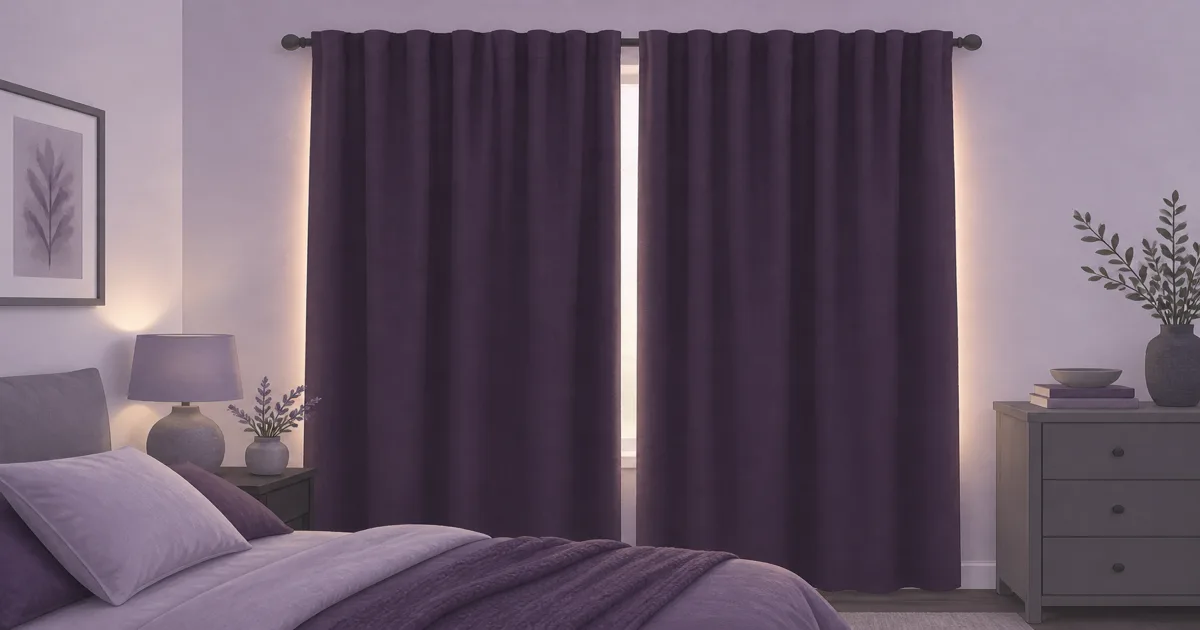
Best Blackout Curtains (2026): Triple Weave vs Lined 100%
Sleep accessories
Blackout curtains fix morning glare and daytime naps when you size them right. Here is how triple-weave grommet panels compare with lined 100% blackout sets.
Our picks
Most people shopping for blackout curtains want one thing: stop morning light from waking them early. Shift workers and nursery naps need more than that. You want fabric that actually darkens the room, hangs straight, and feels like fabric rather than plastic.
Everyday triple-weave grommets handle most bedrooms. Lined 100% panels block light through the fabric as well as at the edges. A shorter budget set is for smaller windows, not a tall east-facing bedroom. Size and overlap matter as much as the weave. Curtains are one piece of a sleep-ready room, and our sleep accessory guides cover the sound and light gear that pairs with them.
What blackout curtains actually fix
Curtains darken the window itself. They do not seal the wall. If the rod sits inside the trim and panels barely meet in the middle, you will still see bright seams at dawn. Size and hang matter as much as the fabric.
How much light do blackout curtains actually block?
Triple-weave polyester blocks about 85 to 99% of light, and the number depends on color. A dark charcoal or navy panel hits close to 98 to 99%, so a streetlight disappears and dawn is a faint line. A light beige or white panel from the same weave lands nearer 85%, which is room darkening, not blackout. A lined 100% set with a sewn-in black backing is the only version that claims full block through the fabric.
What is the difference between blackout and room darkening?
Room darkening cuts most of the glare and leaves a faint glow, which is what a single weave in a pale color does at about 85 percent. Blackout means the fabric itself passes almost no light, which in practice needs a dark colorway or a sewn-in liner.
Why does light still leak around the edges?
Light leaks at the edges, not through the middle. Any flat panel does that, no matter how thick the fabric. The fixes are mechanical: a wrap-around rod, panels about 1.5 to 2 times the window width, and a rod mounted 4 to 6 inches above and beyond the frame. The grommet holes are the weakest spot because they sit on the rod, so a wrap-around style or a tension rod tucked inside the frame seals better.
Do blackout curtains cool the room?
They cut heat gain through the glass and soften drafts, which helps at the window. They do not lower your core body heat, and a sealed memory-foam bed can still sleep warm under perfect curtains. Fix light first, then revisit sheets and toppers if night sweat stays the complaint.
Are blackout curtains good for a nursery?
Yes, and a nursery is the room where the lined version makes the most difference. A sewn-in black liner removes the edge gap a detachable liner leaves, so daytime naps get closer to dark. Mount the rod wide, overlap the panels in the center, and add a dark colorway.
Comparison: everyday weave vs lined 100% vs budget
Use the table to pick a set. Then measure width and length before you click a color you like.
How wide a window do two panels cover?
Measure the two panels together, not one. Two 52 inch panels total 104 inches, enough for a window up to about 69 inches at a 1.5x gather or 52 inches at a full 2x. Two 42 inch panels total 84 inches, which covers about 56 inches at 1.5x.
What is the cheapest way to darken a bedroom?
For a normal bedroom, one budget pair on a wide rod is the cheap fix. Two 42 inch panels cost about $11 and a 52 inch NICETOWN pair about $16. The lined pair runs about $46 a window, roughly $30 more than the single weave, so save it for a room that has to go fully dark.
Does the color matter more than the weave?
Yes, at the same price. One triple weave runs about 85 percent block in a pale color and 98 to 99 percent in charcoal, which is a 13 point swing from dye alone. A sewn-in liner is the only upgrade that beats picking the darker colorway.
Top pick: NICETOWN Gray Blackout Curtains 52 x 84 Grommet
Best for: Standard bedrooms that need strong darkening without a specialty lined drape.
NICETOWN’s 52 by 84 grommet pair is what most bedroom windows end up with, for good reason. Triple-weave polyester blocks most daylight when you choose a darker gray, and the 6 grommets per panel fit common rods. Darker colors block more light, and edge light still sneaks in if panels do not overlap.
Hang the rod a few inches outside the frame when you can. Overlap the panels in the middle. That one install habit does more than chasing a slightly thicker weave.
Choose NICETOWN grommet if: you want proven bedroom darkening at a normal price. Skip NICETOWN grommet if: you sleep days under a blazing window and need claimed 100% fabric blackout.
Best 100% blackout: NICETOWN Gray 100% Blackout Lined Curtains 52 x 84
Best for: Shift work, nursery naps, and east-facing rooms that still glow through single-layer weave.
The lined NICETOWN set adds a black backing layer that blocks light through the fabric, not just at the edges. Same 52 by 84 footprint as the top pick, so you can compare like for like. Buyers who need cave darkness usually prefer this over basic triple-weave, even if it costs more and hangs heavier.
Rod-pocket hanging can look fuller when gathered. If you want easy sliding instead, check the same brand’s grommet lined options in your size. The key upgrade is the liner, not the header alone.
Choose lined 100% if: daytime sleep is non-negotiable. Skip lined 100% if: a normal overnight bedroom only needs “most of the glare gone.”
Best budget: ChrisDowa Blackout Curtains Dark Gray 42 x 63
Best for: Apartments, smaller windows, and a first blackout buy under a hard budget.
ChrisDowa’s dark gray grommet set is the cheaper lane. Thermal insulated panels, room darkening, easy hang, and a price that leaves room for a rod. The catch is size. Forty-two by sixty-three is short for many US bedroom windows, by 21 inches against a standard 84 inch panel. Measure first. If your drop needs 84 inches, do not force this set and then blame the fabric.
For a primary bedroom with tall windows, spend on the NICETOWN 52 by 84 pair instead. Save ChrisDowa for a guest room, office nap corner, or a clearly short window.
Choose ChrisDowa if: the window is small and price is the constraint. Skip ChrisDowa if: you need floor-length panels on a wide bedroom window.
Who should buy which set
If street noise still wakes you after the room goes dark, add a white noise machine. Light and sound are different problems. Curtains help one. Masking helps the other.
Measure and hang checklist
- Measure window width and multiply by about 1.5 to 2 for total panel width.
- Decide sill, apron, or floor length on purpose.
- Mount the rod wider and higher than the frame when possible.
- Overlap panels in the center so mid-window seams disappear.
- Prefer darker colorways for the same weave if light block is the goal.
Wash on cold, low dryer heat, and hang promptly. High heat can shrink polyester and leave panels short just enough to recreate that annoying light stripe at the floor.
A quiet mattress protector still belongs under your sheets. Curtains protect sleep timing. They do not protect foam from sweat. If heat is still an issue after the room goes dark, compare cooling sheets next. If light is handled but you still want audio in bed, see sleep headphones.
What blackout curtains will not fix
A thin sheer underlayer left open will leak light no matter how good the outer panels are. So will a rod mounted inside a deep recessed frame with no side return. Fix the hang before you buy a third set.
Also keep expectations honest. “Blackout” on Amazon covers both strong room-darkening weaves and true lined 100% claims. Check the stated opacity and look at customer photos of the room at midday. Sunrise glow at the edges is an install width problem more often than a bad brand.
Will blackout curtains actually pay for themselves in cooling?
Not in most homes. They cut heat gain at the glass, which helps a sun-facing window, but a pair at about $16 a window will not move a summer power bill the way a thermostat change does. Buy them for sleep, and treat the thermal claim as a small bonus.
Final take
The best blackout curtains for most people are the NICETOWN 52 by 84 grommet panels. Buy the lined 100% NICETOWN set when daytime darkness matters more than price. Keep ChrisDowa for smaller windows when the budget is tight and the length actually fits. Measure twice, overlap the panels, and the room gets dark enough to sleep. If light still sneaks in around the frame, add a sleep mask as a second layer.
Frequently Asked Questions
Do blackout curtains block 100% of light?
Triple-weave panels usually block most daylight, not every glow. Lined 100% blackout sets do better through the fabric. Edge gaps still need overlap, wider panels, or wraparound rods.
Should I buy grommet or rod pocket curtains?
Grommets slide easier and look clean on a modern rod. Rod pocket and back-tab styles can look fuller when gathered. Pick the header that matches the rod you already own.
What size blackout curtains should I buy?
Measure window width and aim for about 1.5 to 2 times that width across both panels. Length should hit the sill, apron, or floor on purpose. Guessing from an old sheer set is how people end up with bright gaps at the sides.
Do darker colors block more light?
Usually yes. Navy, charcoal, and black hide more glow than pale grays or whites in the same weave. If the room faces sunrise, start with a dark colorway.
Will blackout curtains cool the room?
They reduce heat gain through glass and can help a bit with drafts. They do not replace a cooler mattress stack or a real HVAC fix. Pair them with breathable sheets if you still wake hot.
Can I wash blackout curtains?
Yes. Wash them on cold with low dryer heat and hang them promptly. High heat can shrink polyester and leave the panels short enough to reopen a light stripe at the floor.
Are blackout curtains good for a nursery?
Lined 100% panels in a dark color are the better choice for nursery naps. Add overlap at the center and mount the rod wide so daytime light does not leak around the edges.