Best CPAP Pillow (2026): Firm Contour vs Full-Face Cutouts
A CPAP pillow should clear your mask and hose so the seal holds when you sleep on your side. Compare firm Lunderg foam, EnduriMed full-face cutouts, and Elviros when loft needs more insert tuning.
By Harper Lin
Mattressbasics is reader-supported. As an Amazon Associate we earn from qualifying purchases. Learn more.
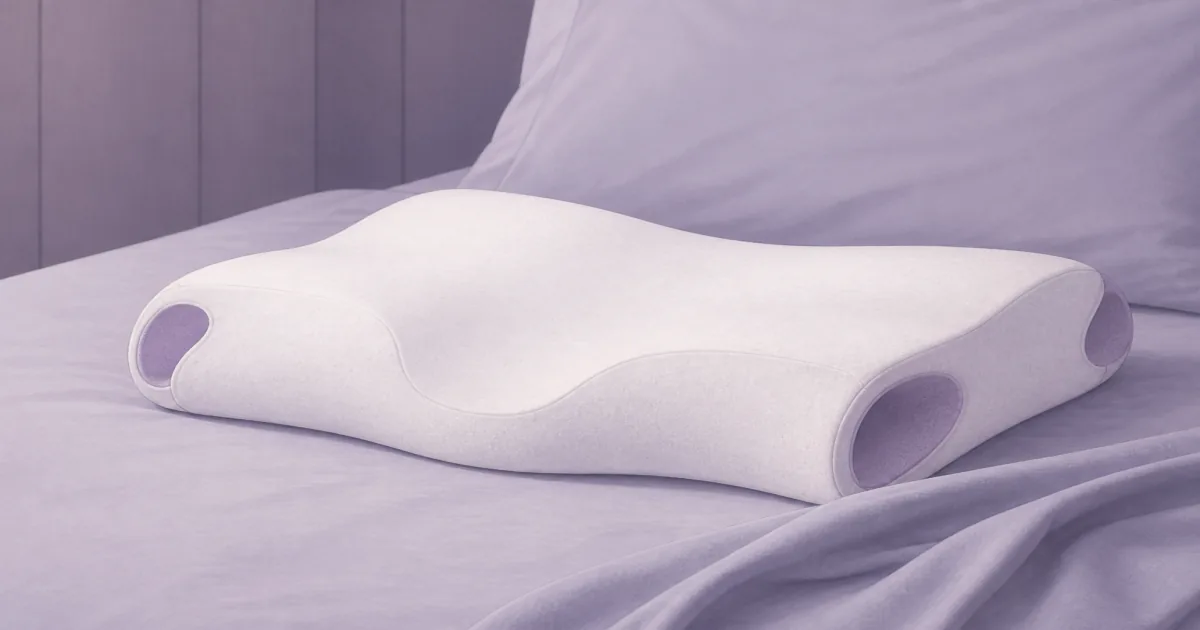
The short answer: Start with the Lunderg CPAP Pillow (paid link) for firm adjustable memory foam and solid mask cutouts. Choose EnduriMed (paid link) when a full-face mask needs deeper corner gaps. Pick Elviros (paid link) when you need more insert loft options after a simpler two-height pillow still feels wrong.
Our picks
A CPAP pillow is a contoured cushion with mask cutouts and hose clearance so therapy gear does not get crushed into a flat pillow. Side sleepers buy one when a regular pillow shoves the cushion, breaks the seal, or leaves red marks after a night of fighting the hose.
Browse more options in our pillows category, and use the best pillow for side sleepers guide if loft and shoulder fill are still wrong after the mask finally seals. A CPAP pillow solves mask interference. It does not replace the right head height on its own.
Firm contour vs full-face cutouts vs multi-insert loft
Buy for your mask type and the failure mode you actually have.
If neck pain is louder than mask leaks, fix loft first with the neck pain pillow guide, then add CPAP cutouts if the seal is still the weak link.
Lunderg: best everyday CPAP pillow for most people
The Lunderg CPAP Pillow for Side & Back Sleepers (paid link) is the practical default. Firm memory foam holds its shape, the contour leaves space for the mask, and a removable 1.1 inch layer lets you drop loft for back sleep or keep height for side sleep. Two cases in the box matter more than marketing copy when you wash covers every week.
Owner patterns are clear: cutouts help the seal, and firmness is the split. People who already like memory foam call it supportive. People who sleep on soft fiberfill call it a brick. If you know you hate firm foam, skip straight to a softer CPAP design or accept you will need a longer break-in.
Choose Lunderg when you want one adjustable CPAP pillow that works with common nasal, nasal pillow, and full-face masks. Skip it if soft loft is non-negotiable, or if you already know you need deeper full-face corner gaps than a general contour offers.
EnduriMed: best when a full-face mask needs room
The EnduriMed CPAP Pillow (paid link) is built around corner gaps and a dual-thickness contour so a full-face cushion can sit without the pillow shoving it sideways. Side sleepers who used to tighten headgear until their cheeks hurt often report they can loosen straps once the pillow stops crushing the mask. A removable pad flips the loft between thicker and thinner nights.
The tradeoff is specificity. Full-face owners are the happy core. Some nasal-pillow users get less benefit from the corner cutouts and still need loft tuning. Foam odor shows up in early nights for sensitive noses; airing the pillow helps.
Choose EnduriMed when full-face pressure marks and tubing tangles are the nightly problem. Skip it if you only use a tiny nasal pillow and mainly need a firmer adjustable block like Lunderg, or if you already know you need more than two loft steps.
Elviros: best when loft needs more insert options
The Elviros CPAP Pillow (paid link) is for people who already tried a simple two-height CPAP pillow and still woke with a tucked chin or a floating head. Interchangeable memory foam inserts and distinct neck/shoulder zones let you build a taller or lower stack around the mask instead of living with one removable pad. Side, back, and stomach claims are really “try the thinner stack” more than magic stomach therapy.
The tradeoff is fiddling. More inserts mean more nights of swapping foam before the setup settles. Firm high-density foam still runs warm for some owners, and the pillow is larger than a minimal travel contour.
Choose Elviros when height tuning is the remaining problem after mask cutouts. Skip it if you want the simplest first buy (start with Lunderg) or if full-face corner clearance is the only gap you need filled (EnduriMed).
How to set up a CPAP pillow so the seal holds
- Put your usual mask on and lie in your normal side or back position.
- Nest the cushion into the cutout so the pillow is not pressing the frame into your cheek.
- Route the hose through the gap so it does not hang off the bed and pull.
- Start with mid loft, then remove or add a layer after two or three nights if your neck feels tucked or stretched.
- Recheck mask size and cushion wear if leaks stay loud. The pillow cannot fix a dead silicone seal.
If you also need torso elevation for reflux, pair this with a wedge pillow instead of stacking loose bed pillows under your shoulders.
Who should skip a dedicated CPAP pillow
Skip it if you only sleep on your back with a well-fitted mask and a regular pillow already clears the cushion. Skip it if your main issue is untreated neck pain from wrong loft; fix that with a standard side sleeper or neck pillow first. And skip shopping for a CPAP pillow as a substitute for a sleep-study follow-up when therapy pressure or mask fit is clearly wrong.
Frequently Asked Questions
What is the best CPAP pillow for side sleepers?
Start with the Lunderg CPAP Pillow if you want firm adjustable foam and broad mask compatibility. Move to EnduriMed when a full-face mask needs deeper corner clearance. Choose Elviros when you need more insert loft options after a simpler two-height pillow still feels wrong.
Do CPAP pillows really reduce mask leaks?
They help when the leak is from pillow pressure pushing the cushion off your face. They do not fix a wrong size mask, worn cushion, or pressure settings. If leaks stay loud after a dedicated pillow, talk to your clinician or DME about fit, not only bedding.
CPAP pillow vs regular side-sleeper pillow?
A side sleeper pillow mainly sets head loft. A CPAP pillow adds mask-friendly cutouts and hose clearance so the seal survives side sleep. If you already have good loft but still crush the mask into the pillow, swap to a CPAP shape instead of buying a taller standard pillow.
How thick should a CPAP pillow be?
Thick enough that your neck stays neutral with your usual mask on, not so high that your chin tucks or so low that your shoulder lifts the head off the foam. Use removable layers for a few nights each way. If neck pain is the main issue, also check the pillow loft guide and neck pain pillow advice.
Will a CPAP pillow help with reflux or snoring?
Mild elevation is a different job. Use a wedge pillow when torso incline is the goal. A CPAP pillow can make therapy more comfortable, which may indirectly help sleep quality, but it is not a reflux ramp or a snoring cure.
Are these pillows FSA or HSA eligible?
Some CPAP pillow listings advertise FSA/HSA eligibility. Confirm with your plan administrator before you assume reimbursement. Eligibility language on a product page is not a guarantee for every account.
How do I wash a CPAP pillow?
Wash the removable cover on the care label. Spot-clean foam. Do not soak dense memory foam unless the maker says you can. Keep a second case rotating so the foam never sits bare for long.
Can stomach sleepers use a CPAP pillow?
Many contoured CPAP pillows claim stomach modes by dropping loft and using the flatter face. Stomach sleep with a mask is still awkward for a lot of people. Prefer a thin profile and expect more trial nights than side sleepers need.