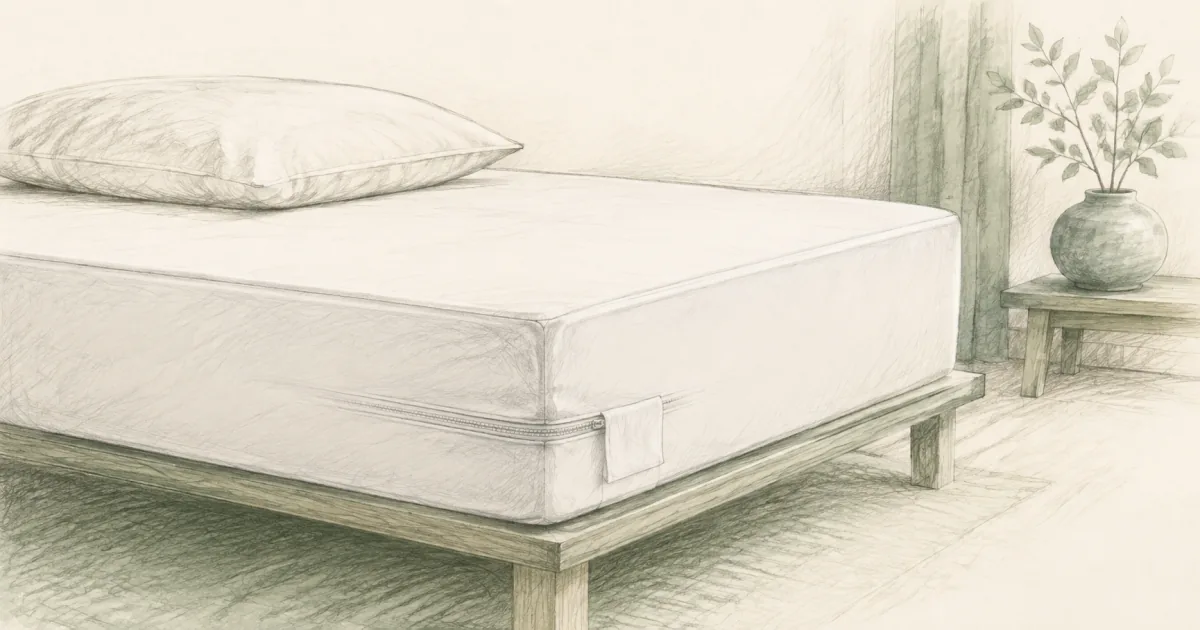
Best Mattress Encasement (2026): Zippered Covers That Block Bed Bugs, Allergens, and Spills
Bedding
A zippered mattress encasement seals all six sides. Pick by mattress depth first, then decide whether you want a cotton-terry surface, a hotel-quiet polyester, or a budget deep pocket.
Our picks
Start with the bedding category hub if you are still sorting out which barrier you actually need. For everyday spill protection on top of the mattress only, the best mattress protector guide is the faster pick. This guide is the one to read when you also want the sides and bottom covered.
A mattress encasement wraps the whole mattress and zips closed. That is the whole point. A fitted protector only covers the top and a few inches of the sidewall. An encasement seals the top, sides, and bottom so spills, dust mites, allergens, and bed bugs cannot reach the foam.
You only need that level of coverage in a few situations. You are protecting against bed bugs. You have allergies and want the dust mite layer sealed off. You run a guest bed or rental and want the mattress clean for the next sleeper. Or you are just the kind of person who wants the mattress wrapped up once and not bothered for a few years. If none of that sounds like you, a fitted protector is faster and easier.
What a mattress encasement actually has to do
Cover all six sides. Stay sealed. Stay quiet after a wash. Survive the dryer. That is the whole job. Anything beyond that is fabric feel and depth range.
The depth range is the decision that breaks most first-time buyers. An encasement that is too shallow stresses the zipper and tears at the corners. One that is too loose bunches under the sheet and lets the closure gap open. Measure the mattress from the bottom seam to the highest point of the top surface. Do not use the depth printed on a sheet label. Choose an encasement whose listed depth range includes that measurement.
The fabric decides how the bed feels and how it washes. Cotton terry over a waterproof membrane is the closest to sleeping on a regular sheet. Smooth knitted polyester is the hotel-style feel that washes hot, dries fast, and feels quiet. Quilted covers exist but they add bulk and run warm, which is the wrong trade for most people who want an encasement.
For a narrow bed-bug-only setup, see the best bed bug mattress encasement guide. That page goes deeper on treatment timing and inspection. This page is the broader buyer decision.
How encasements differ from a fitted protector
A fitted protector covers the top and the top few inches of the sidewall, then grips the mattress like a fitted sheet. You can strip it off in a minute, wash it with the sheets, and put it back on. That is the right pick when your only worry is spills and accidents.
An encasement is a sleeve that zips around the mattress. It covers the top, the full sidewall, and the bottom. You do not take it off every week. You take it off a few times a year for a deep wash or to inspect the closure. The zippered design is what makes the difference between a fitted cover and a true encasement.
If you have a fitted protector already and the bed feels fine, you do not need an encasement on top of it. If you are starting fresh and you want both spill protection and the six-sided seal, an encasement alone does the spill job too, because the waterproof layer runs through the full cover. The choice between a fitted protector, an encasement, or both is laid out in mattress protector vs encasement.
The picks at a glance
All three are queen-size, waterproof, six-sided zippered encasements. The deciding point is not a vague promise of protection. It is whether the depth range, fabric feel, and wash routine suit the bed you already own.
SafeRest 15-18" Deep: best premium cotton-terry encasement
Best for: A queen mattress that measures 15 to 18 inches tall, including any attached pillow top.
SafeRest gives you the most room at the corners of any value pick on this list. That matters when you have a hybrid or pillow-top mattress where a 12-inch cover would tug hard on the zipper the first time you close it.
The top layer is cotton terry over a waterproof membrane. That is the closest you get to sleeping on a regular sheet with an encasement on the bed. The cotton does not feel like a plastic cover under your fitted sheet, and spills still bead on the membrane instead of soaking the foam.
The zipper has a flap that covers the closure so the teeth do not press against your skin or snag on sheets. It is a small detail that makes a real difference when you are sleeping directly on a pillow-top mattress with the encasement underneath.
Choose SafeRest if: your mattress is 15 to 18 inches deep and you want a cotton-terry surface instead of smooth polyester.
Skip SafeRest if: your mattress is 12 inches or less, where the extra depth leaves too much loose fabric to bunch under the sheet.
Linenspa Queen: best hotel-quiet value encasement
Best for: A standard mattress up to 12 inches deep on a guest bed, kid room, or rental.
Linenspa is the cover that does what most people actually need from an encasement without paying for a deep-pocket build. The brushed polyester face is the same look and feel you find on a freshly made hotel bed. It washes hot, dries fast, and does not crinkle under a fitted sheet after the first wash.
The full six-sided zippered design blocks dust mites, allergens, and bed bugs on every face of the mattress. It is backed by a 10-year limited warranty, which is the longest warranty on this list.
The honest tradeoff is depth. Linenspa is built for a mattress up to 12 inches. If your bed is thicker than that, the zipper will be under load from the first night, and that is the failure mode for any encasement.
Choose Linenspa if: you have a standard-height mattress and want the smooth polyester hotel-style feel at the best value.
Skip Linenspa if: your mattress is taller than 12 inches after you measure it.
Utopia Bedding 14" Deep: best budget deep-pocket encasement
Best for: A 14-inch queen mattress where SafeRest is more cover than you need.
Utopia sits between the other two on depth. Its 14-inch queen model costs less than the SafeRest while giving you more room than the 12-inch Linenspa. The smooth knitted polyester face is designed to stay quiet, and it will not feel like a plastic cover.
The cover is OEKO-TEX certified, which means the fabric and the waterproof layer passed basic chemical testing. That matters more for an encasement than for a topper, because the encasement stays in contact with the mattress for a long time.
The honest drawback is the same as Linenspa: smooth polyester will not feel as soft as cotton terry. If you are sensitive to a synthetic sleep surface, pay more for the SafeRest instead of hoping this one will feel like cotton.
Choose Utopia if: your mattress is close to 14 inches deep and you want full six-sided coverage without the SafeRest price.
Skip Utopia if: you specifically want a cotton-terry top or have a much thicker mattress.
Who should skip an encasement
If your only concern is the occasional spill, a fitted protector is faster to remove, faster to wash, and easier to put back on. The encasement is overkill, and the bulk under the sheet will feel like a step backward.
If your mattress is on a platform bed with no clearance underneath, the bottom of the encasement is doing very little. A fitted cover or a thin waterproof pad is enough.
If you change your mattress every couple of years, the long-term dust mite benefit of an encasement is small. A fitted protector with hot washes covers most of the day-to-day allergen exposure on the top surface.
If you sleep hot and you already have a memory foam topper, an encasement plus a topper plus a fitted protector is a warm stack. Pick one layer to seal the mattress and skip the rest.
How to install and wash an encasement
Remove the sheets and any topper first. Stand the mattress on its long edge if you can do so safely, then slide the open encasement over one corner at a time. This is the easiest way to align the corners without tugging on the zipper.
Zip it slowly once every corner is covered. Do not pull the zipper through a tight spot by force. If the cover feels too tight before it is halfway closed, stop and check the depth range rather than risking a torn seam.
For washing, run the encasement on its own with a small amount of detergent. Skip fabric softener, because it coats the waterproof membrane and reduces spill protection over time. Tumble dry on low. High heat can warp the zipper or shrink the fabric.
Check the zipper and seams when you change sheets. A small gap in the closure is the only way bed bugs or dust mites get past a six-sided encasement, and a quick visual check catches it before it becomes a problem.
For bed-bug-specific timing, professional treatment plans, and inspection steps, the bed bug encasement guide is the deeper read.
Frequently Asked Questions
Do mattress encasements really work?
Yes, when you buy a true six-sided zippered cover that fits your mattress depth. The encasement seals the top, sides, and bottom so spills, dust mites, and bed bugs cannot reach the foam. It is a physical barrier, not a treatment. An active bed bug problem still needs professional remediation.
Can bed bugs get through a mattress encasement?
They cannot get through the fabric or membrane. They can get past a closure that has a gap, so look for a zipper flap or covered closure and check the seams when you change sheets. See our bed bug encasement guide for the narrow bed-bug-focused picks.
Is a mattress cover better than a mattress encasement?
They do different jobs. A fitted mattress cover is faster to remove and wash, so it is the right pick for everyday spills and accidents. An encasement is the right pick when you also want the sides and bottom sealed against bed bugs, allergens, or long-term dust mite exposure. Many households use both. Our full comparison lives at mattress protector vs encasement.
What encasements do hotels use?
Hotels usually run smooth white polyester zippered encasements on a 10 to 12 inch mattress, then put a fitted protector or sheet on top. The smooth polyester washes hot, dries fast, and does not feel like a plastic cover under the sheet. The Linenspa pick below is the same shape and feel in a residential size.
How long does a zippered mattress encasement last?
A good encasement should last three to five years with monthly washes. Replace it sooner if the zipper stops closing cleanly, the seam opens, or the waterproof layer starts letting moisture through.
Will an encasement make my bed noisy or hot?
Old vinyl encasements were both. Modern knitted polyester and cotton terry covers with a polyurethane membrane are quiet after the first wash. They do add a layer, so hot sleepers should pair the encasement with breathable sheets and skip a thick topper on top of it.
Can you use a fitted protector over an encasement?
Yes. Many households leave the encasement on for long-term full coverage and add a fitted protector on top for easier spill cleanup. You will need deep pocket sheets if the stack gets tall.
Do encasements help with allergies and dust mites?
Yes. A six-sided encasement blocks the dust mite allergens that live deep in mattress foam and that a fitted cover leaves exposed on the sides and bottom. It is one of the few changes that has measured evidence behind it for allergy sufferers.