Best Mattress Topper for Heavy People (2026): Dense Support That Holds Up
Heavier sleepers often need denser foam and a flatter mattress core, not the softest topper in the listing. Here is how to choose without adding a hammock.
By Alex Turner
Mattressbasics is reader-supported. As an Amazon Associate we earn from qualifying purchases. Learn more.
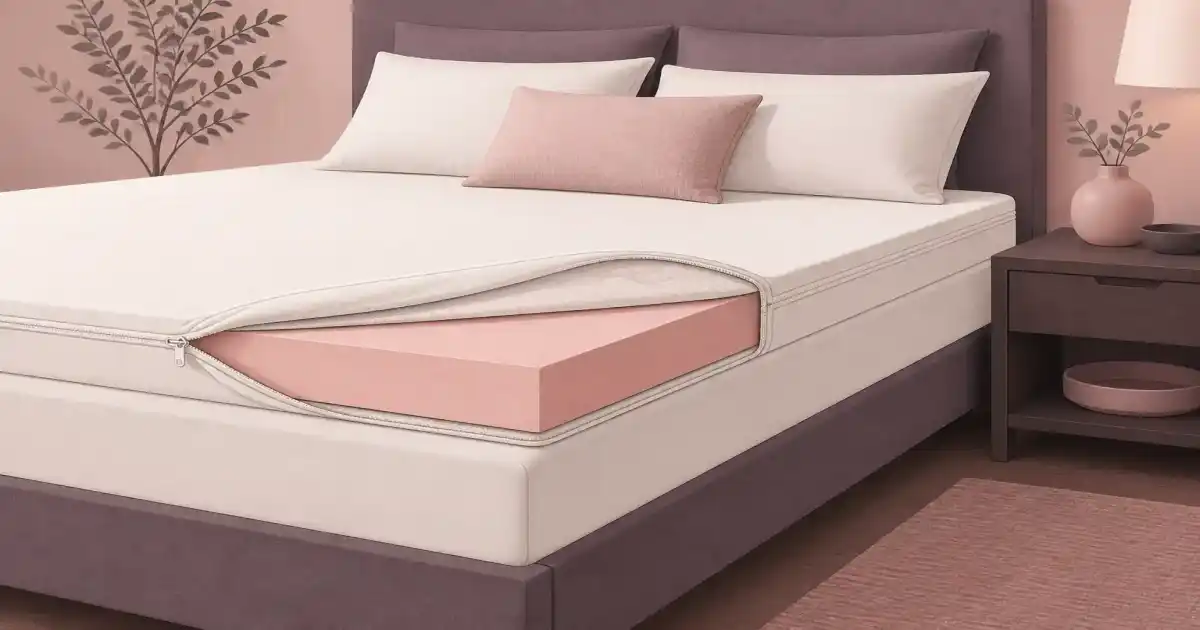
The short answer: Start with the ViscoSoft 3 Inch Select High Density Mattress Topper if you want denser foam that gives some pressure relief without a very soft sink. Choose the Lucid 3 Inch Gel Memory Foam Mattress Topper only when the mattress is firm and pressure relief is the main missing piece.
Our picks
The best mattress topper for heavy people is not automatically the thickest one. A thick, very soft foam layer can feel great at first and then let hips sink farther than shoulders. That is how a comfort upgrade turns into a hammock.
The better question is what the mattress does now. If the core is flat but uncomfortably firm, a topper can add useful pressure relief. If the mattress already has a deep dip or a failing edge, foam is unlikely to give you stable support.
This guide is reader-supported. As an Amazon Associate we earn from qualifying purchases. Learn more.
Check the mattress before buying foam
Take off the sheets and look at the mattress from the side. A small surface impression is normal. A visible valley through the middle, a low spot where hips land, or edges that collapse when you sit are different problems. A topper follows the shape underneath it. It cannot create a flat support core.
If the mattress still feels level but too hard, a topper can work well. People with more body weight compress foam farther, so density and firmness matter more than vague “plush” language. You want enough give for shoulders and hips, but enough pushback to keep your midsection from dropping.
Sleep position matters. Side sleepers usually need more pressure relief. Back sleepers need a stable surface under hips. Stomach sleepers should be cautious with thick plush foam because extra loft can tilt the lower back.
Best overall: ViscoSoft 3 Inch Select High Density Mattress Topper
The ViscoSoft 3 Inch Select High Density Mattress Topper is the safer support-first recommendation here. The listing describes foam density above three pounds per cubic foot and a medium-firm feel. That is a more useful construction clue than a “luxury cooling cloud” headline.
The removable cover is another practical advantage. Heavier sleepers often put more pressure and heat into a bed surface, so being able to remove the cover for cleaning is helpful. The foam will still need a protector, but the cover makes regular care less annoying.
This topper is for a mattress that feels flat but too hard or too thin on top. It is not a repair kit for broken springs. Give it time to expand, use sheets with enough pocket depth, and sleep on it for a week before deciding whether the feel is right.
Choose ViscoSoft if support is the priority and you do not want a very soft hug. Skip it if you only need a temporary guest-bed softener and want the lowest price.
When Lucid is the better fit
The Lucid 3 Inch Gel Memory Foam Mattress Topper is the plush alternative. It has a broad size range and plenty of buyer history, and it can be a good pick when a firm mattress creates sharp shoulder and hip pressure.
Its three-inch profile is enough to change the surface noticeably. That is the benefit and the risk. On a hard, supportive mattress, it can feel like relief. On a bed that already lets you sink, it can add more depth and make turning harder.
Choose Lucid if your mattress is truly firm and your main complaint is pressure, especially as a side sleeper. Skip it if you already feel a valley under your hips or sleep on your stomach and need more pushback.
Density matters more than dramatic thickness
Foam density is not the only quality measure, but it helps separate a support layer from a very soft short-term cushion. Denser foam tends to recover better under regular load. It can also feel warmer, which makes cover design, room temperature, and sheets more important.
Three inches is a sensible starting point for most people. Two inches may not create enough relief on a firm bed. Four inches can be useful for some cases, but it changes the whole setup: sheets may not fit, your pillow height may need adjustment, and a soft profile may create more sink than you wanted.
Set it up so it lasts
Unbox the topper on a flat bed or floor and let it expand fully. Do not judge it while it is still creased from compression. Put a breathable mattress protector over the foam before adding sheets. Foam absorbs spills quickly, and a protector is much easier to wash.
Measure total bed height before buying sheets. A 12-inch mattress plus a three-inch topper and protector often needs deep pockets. If fitted sheet corners keep coming off, the issue is usually the pocket measurement, not the topper.
If heat is part of the problem, do not assume any gel label makes foam cold. Dense foam can still sleep warm. Use breathable sheets, keep bedding simple, and compare our best cooling mattress topper picks if temperature is the main priority.
When to move on from the topper idea
A topper is worth trying when it changes a healthy mattress from too firm to comfortable. It is not a long-term answer to a broken core. If you keep adding foam and still wake in the same dip, save the money for a replacement mattress.
For a broader overview of materials and thickness, read the best mattress topper guide. If back alignment is your main concern, the mattress topper for back pain guide explains when softness helps and when it makes things worse.
Final take
Heavier sleepers usually need construction that holds shape, not the softest topper available. Start with ViscoSoft for denser medium-firm support. Use Lucid when a flat mattress is too hard and needs more pressure relief. If the bed already sags, a topper may hide the problem briefly, but it will not fix it.
Frequently Asked Questions
What topper thickness is best for heavier people?
Three inches is a practical starting point on a firm, flat mattress. More thickness is not always better because soft foam can let hips sink.
Should heavier sleepers choose firm or soft foam?
Start with medium-firm or denser foam when support is the concern. Choose plush foam only if the mattress is genuinely too hard.
Can a topper fix a sagging mattress?
No. If the mattress has a deep valley or collapsed edges, adding foam usually makes alignment worse.
Do heavy sleepers need a cooling topper?
Not automatically, but dense foam and a breathable cover can help if you tend to sink deeply and sleep warm.