How to Clean a Mattress Topper: Spot Clean Foam and Wash Covers Safely
A foam topper should not be drenched and thrown in the dryer. This guide explains the safer way to remove marks, smells, and everyday buildup.
By Alex Turner
Mattressbasics is reader-supported. As an Amazon Associate we earn from qualifying purchases. Learn more.
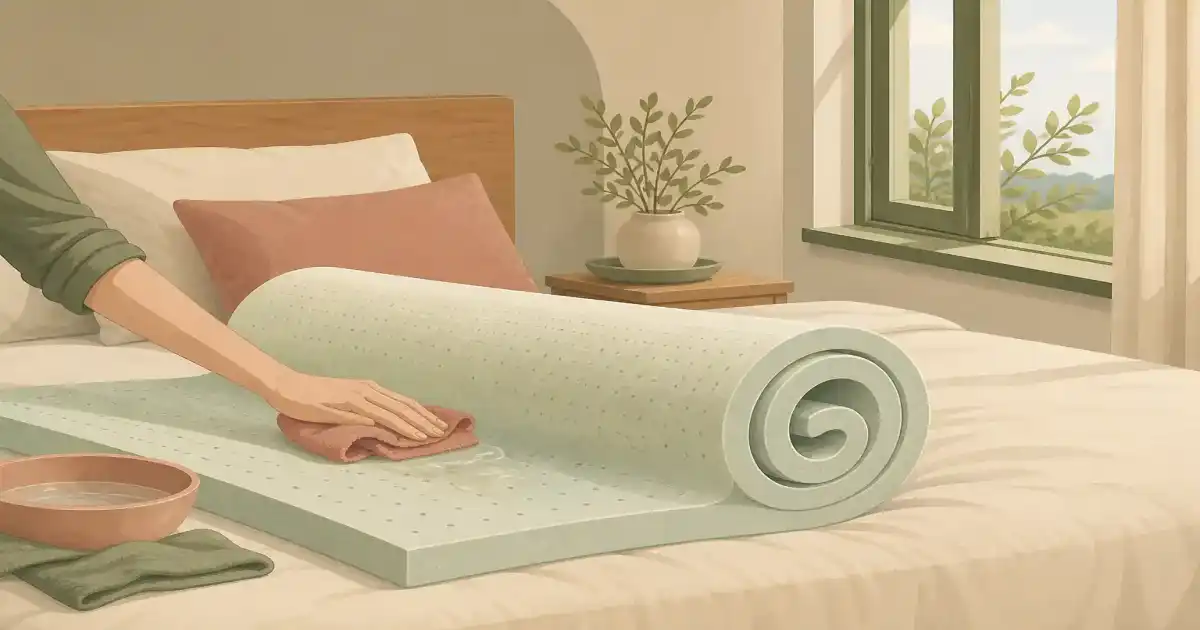
The short answer: Remove and wash the cover if your topper has one. For bare foam, vacuum it, blot stains with very little moisture, and dry it fully before it goes back on the bed. Do not soak foam or try to speed things up with high dryer heat.
Our picks
A mattress topper is close enough to the body that it picks up sweat, skin oil, pet hair, and the odd coffee spill. It is also big, awkward, and usually made of foam. That combination makes people reach for too much water. A soaked foam topper is hard to dry and can smell worse than the original stain.
The safer approach is simple: clean the cover when there is one, clean the foam surface gently, and add a protector so you do not have to repeat the job every month.
This guide is reader-supported. As an Amazon Associate we earn from qualifying purchases. Learn more.
Start with the cover and care label
Strip the bed and read the topper label before mixing a cleaning solution. Some toppers have a zippered cover that can go through a normal gentle wash. That is the easiest setup. The ViscoSoft 3 Inch Select High Density Mattress Topper has a removable cover, so most routine cleanup happens in the laundry instead of on the foam.
Bare foam models such as the Linenspa 3 Inch Gel Infused Memory Foam Mattress Topper need more care. You can clean them well, but you cannot treat the entire topper like a blanket. Do not put it in the washing machine, saturate it in a bathtub, or put it in a hot dryer.
If the tag calls for a specific cleaner or only permits spot treatment, follow that instruction. Foam density, glue, and cover materials vary.
Remove surface dust before treating stains
Let the topper air out for a few minutes, then vacuum both sides with an upholstery attachment. Use low suction and avoid pulling hard on thin foam edges. This removes hair, crumbs, and surface dust that turn into muddy streaks once water touches them.
For odors without a visible stain, sprinkle a thin, even layer of baking soda across the topper. Leave it for four to eight hours with the room ventilated, then vacuum it up. Baking soda will not remove a deep spill, but it can make a sweaty or stale topper smell fresher.
Do this before spot cleaning. You will get a clearer view of what actually needs treatment.
Spot-clean foam with less water than you think
Mix a small bowl of cool water with a few drops of mild liquid detergent. Dampen a clean white cloth. It should be barely wet, not dripping. Blot the stain from the outside toward the center so it does not spread.
Do not scrub hard. Foam tears more easily than fabric, especially along an old stain. Keep blotting with small amounts of solution until the mark fades. Then take a second cloth dampened with plain water and blot away detergent residue.
Press dry towels firmly over the treated area. You are trying to pull moisture out, not push it deeper. If the spill reached the mattress beneath, clean and dry that surface separately before putting the topper back.
For urine, vomit, or another bio mess, clean it promptly and follow the product label. If an odor stays after full drying, a cleaner designed for that specific stain may help, but test it on a hidden corner first.
Dry the topper completely
Lay the topper flat in a room with airflow. Open windows if the weather is dry, run a fan nearby, or use a dehumidifier. Avoid direct high heat from a hair dryer or radiator. It can warp foam and leave the outside dry while the middle remains damp.
Check the cleaned spot after a few hours. Press it with your palm. If it feels cool, heavy, or slightly tacky, it needs more time. Do not cover damp foam with sheets. Trapped moisture is how mildew starts.
If you cleaned a large area, give the topper a full day. Turn it once halfway through if you can do so without creasing it. The extra time is boring, but it is cheaper than replacing a topper that develops a permanent damp smell.
A mattress protector saves the next cleanup
Put a waterproof but breathable protector over the topper, then your fitted sheet. This is the practical move for kids, pets, night sweats, and anyone who drinks coffee in bed. A protector is much easier to wash than a three-inch slab of foam.
Our best mattress protector guide covers fitted options that sit quietly under sheets. Check pocket depth before ordering. Your mattress plus topper plus protector may be several inches taller than the mattress alone.
Wash sheets weekly, wash the protector every few weeks, and vacuum the topper when you change bedding. That schedule handles most everyday buildup without turning cleaning into a project.
When the topper should be replaced
Cleaning cannot fix foam that has lost its structure. Replace it if it has a deep body-shaped dip, crumbles when you lift it, or keeps a sour odor after full drying. Also replace it if a stain has soaked through and you cannot get it fully clean and dry.
If the topper is merely too soft or too thin, do not confuse that with dirt. The best mattress topper guide can help you choose a different feel. If you are still deciding whether you need a thin quilted layer or real foam, compare the two in our mattress pad versus mattress topper guide.
Final take
Clean a mattress topper with a light touch. Wash the removable cover, vacuum the foam, blot stains with a barely damp cloth, and give the topper all the time it needs to dry. A protector and regular sheet washing will spare you from having to soak foam again.
Frequently Asked Questions
Can you put a mattress topper in the washing machine?
Most foam toppers should not go in a washer. Remove and wash the cover if it has one, then spot-clean the foam.
Can you use baking soda on a mattress topper?
Yes. A light layer can help with surface odors. Vacuum it away after several hours.
How long does a foam topper take to dry?
After spot cleaning, allow at least several hours in a ventilated room. It must feel dry throughout before you remake the bed.
Can you steam clean memory foam?
Avoid soaking it with steam. Moisture can stay inside the foam and create a mildew problem.