How to Wash a Mattress Protector: Keep the Waterproof Layer Working
A mattress protector is easy to wash until high heat, bleach, or fabric softener damages the waterproof layer. These steps keep it clean and useful.
By Alex Turner
Mattressbasics is reader-supported. As an Amazon Associate we earn from qualifying purchases. Learn more.
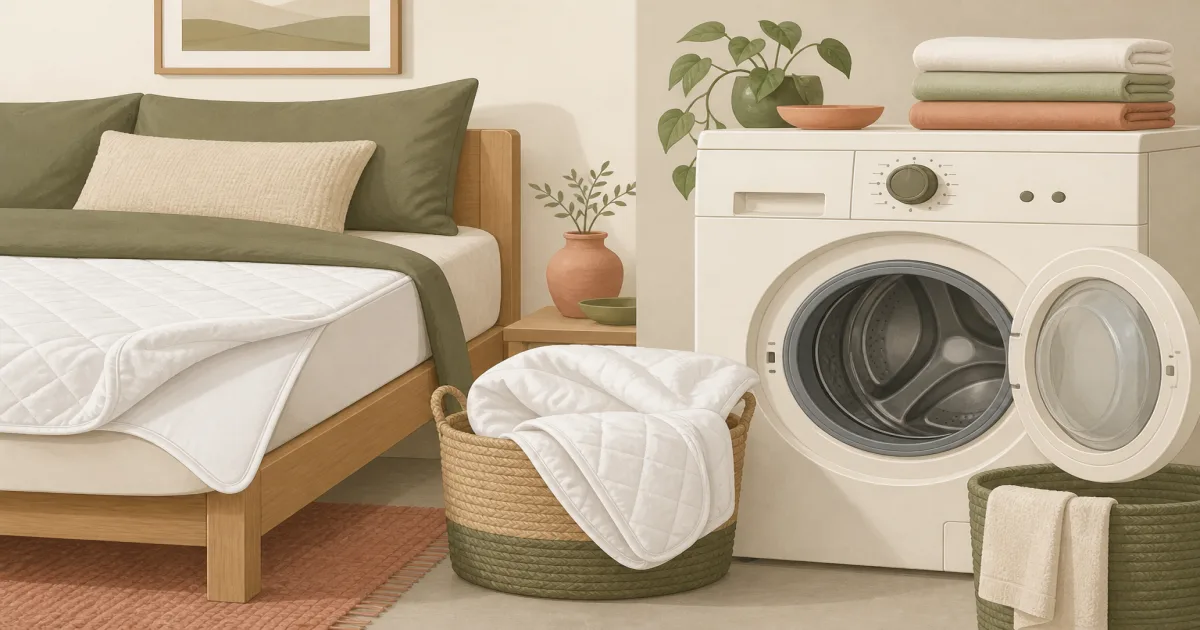
The short answer: Wash a mattress protector in cool or warm water with a small amount of mild detergent, then dry it on low heat. Skip bleach, fabric softener, and high heat because they can damage the waterproof layer.
Our picks
A mattress protector is meant to handle sweat, spills, and ordinary messes, so it needs regular washing. The difficult part is that its thin waterproof backing does not like the same harsh treatment you might use for white towels. Treat it gently and it can keep doing its job without becoming stiff, noisy, or leaky.
This guide is reader-supported. As an Amazon Associate we earn from qualifying purchases. Learn more.
Read the tag before you start
The care tag on the actual protector wins over any general rule. Most fitted waterproof protectors can be machine washed, but temperature and drying instructions vary. Remove the protector from the mattress, shake off loose debris, and zip or fasten any closures before washing.
The SafeRest Waterproof Queen Mattress Protector is a typical fitted option: easy to remove, washable, and designed for normal household use. It is not an excuse to ignore the product label, especially if yours uses a different fabric or membrane.
Wash with less detergent than you think
Use a gentle cycle with cool or warm water and a modest amount of liquid detergent. Excess detergent is hard to rinse out of a layered fabric. It can leave the protector feeling stiff and may trap odors after it dries.
Treat a fresh stain before washing by blotting it with cool water and a little mild detergent. Do not scrub hard enough to rough up the fabric. For a large spill, wash the protector promptly rather than letting liquid dry into the quilted surface.
Dry it low and check the backing
Tumble dry on low heat if the label allows it. The protector may take longer than a sheet because the backing slows airflow. Pull it out once it is dry instead of leaving it in a hot dryer for another full cycle.
Air drying is also fine when you have space, but keep it out of direct harsh sun for long periods. Once dry, look at the underside. If the membrane is peeling, cracked, sticky, or visibly worn, washing cannot restore it. That is a sign to replace the protector before the next spill reaches the mattress.
Keep the bed layers straight
A fitted protector sits over the mattress and under your sheet. It is made for regular removal and washing. A zippered mattress encasement covers all six sides and usually stays on longer. A mattress pad adds cushioning rather than waterproof protection.
If you need a quiet fitted layer for everyday spills, compare the products in our best mattress protector guide. Choose the size after measuring the mattress depth, especially if you use a topper.
Final take
Wash your mattress protector regularly with mild detergent and low heat. The safest habit is simple: no bleach, no fabric softener, no hot dryer. A clean protector is easier to live with, and a working waterproof layer is much cheaper than cleaning a mattress after an accident.
Frequently Asked Questions
How often should I wash a mattress protector?
Every one to two months is a reasonable routine, with an immediate wash after spills, illness, or a pet accident.
Can I put a mattress protector in the dryer?
Usually yes on low heat. High heat can damage the waterproof backing, so follow the care label and avoid the hottest setting.
Can I use bleach on a mattress protector?
Avoid it unless the manufacturer specifically allows it. Bleach can weaken waterproof membranes and elastic.
Why is my mattress protector no longer waterproof?
Age, high heat, harsh chemicals, and wear can damage the backing. Replace it if liquid passes through after a normal wash.