How to Wash Pillows: A Safe Machine-Wash Guide for Down Alternative and Foam
Most down-alternative pillows can go in the washer. Foam pillows need gentler care. Here is how to clean both without creating a damp, lumpy mess.
By Harper Lin
Mattressbasics is reader-supported. As an Amazon Associate we earn from qualifying purchases. Learn more.
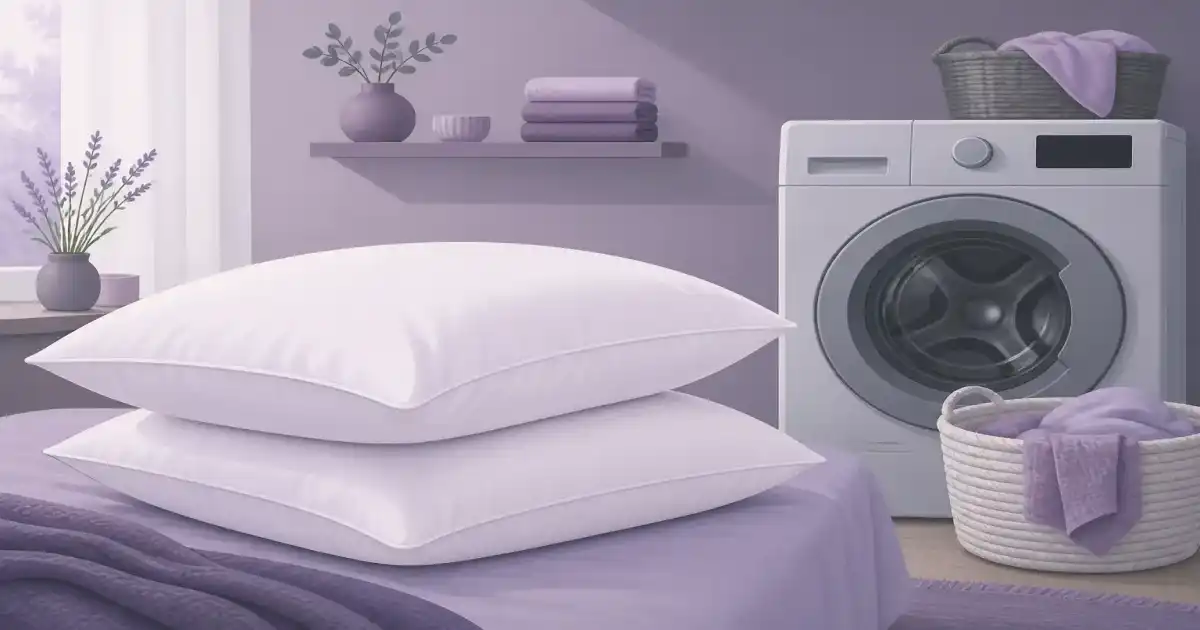
The short answer: Most polyester down-alternative pillows can go through a gentle wash and a long low-heat dry. Wash foam pillow covers instead, then spot-clean the foam. The important part is getting every pillow fully dry before it goes back on the bed.
Our picks
Pillows collect sweat, skin oil, hair products, and the occasional midnight sneeze. A pillowcase takes the first hit, but it does not keep everything out forever. Washing a pillow is not difficult, although it is easy to rush the drying step and end up with a lumpy, musty result.
Start with the care tag. It decides whether the whole pillow goes into the washer or whether only the cover gets cleaned. The steps below work for most washable polyester and down-alternative bed pillows. They are not a substitute for a manufacturer instruction that says dry clean only.
This guide is reader-supported. As an Amazon Associate we earn from qualifying purchases. Learn more.
Check the fill before you add water
Down-alternative and polyester-fill pillows are normally the easiest. They can usually handle a gentle machine cycle and a thorough dryer session. The Beckham Hotel Collection Bed Pillows are an example of a washable down-alternative pair. They are a sensible replacement choice if you want a simple pillow that will not make laundry day complicated.
Memory foam, shredded foam, latex, and buckwheat need different treatment. A solid foam core can hold water for days and may crack as it dries. An adjustable shredded-foam pillow such as the Coop Home Goods Original Adjustable Pillow usually has a washable cover, but its inner fill should stay out of the washer unless the product label specifically says otherwise.
If the tag is missing, assume foam should not be soaked. Remove the cover, vacuum the pillow surface, spot-clean marks, and let it air dry completely.
How to wash down-alternative pillows
Use a front-loading washer when you can. A top-loader with a center agitator can twist and stress pillows. If that is your only machine, wash two pillows together so the load stays balanced.
- Remove pillowcases and protective covers.
- Pretreat visible makeup or oil marks with a small amount of mild liquid detergent.
- Put in two pillows if your washer has room.
- Choose a gentle or delicate cycle with warm water.
- Use a small amount of regular liquid detergent, not a full heavy-duty cap.
- Run an extra rinse if the machine offers one.
Too much detergent is the usual mistake. It leaves soap in the fill, which makes a clean pillow feel stiff and attracts dirt sooner. Bleach can weaken fabric and leave yellow patches, so skip it unless the care label explicitly allows it.
Dry them until the center is dry
Move pillows directly from the washer to the dryer. Use low heat or air fluff and add two clean dryer balls. Tennis balls also work if they are clean, but dryer balls do not bring a rubber smell into the bed.
Stop the dryer every 30 to 45 minutes. Pull the pillows out, squeeze the middle, break up any clumps, and turn them over. A pillow can feel dry on the outside while its center is still damp. That trapped moisture is what causes the sour smell people blame on the washer.
Expect this to take longer than a normal sheet load. A pair of thick pillows may need two or three cycles. When the pillow feels dry, leave it out for an hour before making the bed. If the center feels cool or heavy, put it back in the dryer.
Clean foam pillows without ruining them
For a solid or shredded foam pillow, unzip and wash the removable cover according to its label. Then take the foam insert outside or to a well-ventilated room. Vacuum it with an upholstery attachment to remove dust and loose hair.
For a small stain, mix a little mild detergent with water, dampen a cloth, and blot the mark. Do not pour the mixture directly on the foam. Follow with a second cloth lightly dampened with plain water, then press with a dry towel.
Let the pillow lie flat until it is fully dry. Direct high heat can damage foam, so do not put it in the dryer. If odors are the issue rather than a stain, sprinkle baking soda over the surface, leave it for a few hours, then vacuum it off.
Keep a pillow from getting gross so fast
The easiest way to wash pillows less often is to use two layers: a zippered pillow protector under a washable pillowcase. Wash the case every week with sheets. Wash the protector every month or two. Then wash the pillow itself every three to six months, or sooner after illness, a spill, or an unusually sweaty stretch.
Fluff down-alternative pillows each morning. It keeps the fill from settling into a hard pancake. For adjustable pillows, keep any spare fill in its bag and recheck loft after cleaning the cover. A clean pillow that is suddenly too flat can still leave your neck bent.
Know when washing is not enough
Replace a pillow if the fill stays lumpy after a wash, the foam crumbles, or it has an odor that returns after complete drying. Also replace it when it no longer holds the height you need. For side sleepers, that may happen before the fabric looks worn out.
If your current pillow is washable but too low, our side sleeper pillow guide explains how to judge loft. If you have a foam core, use the more specific memory foam pillow washing guide before you add water.
Final take
Wash down-alternative pillows on gentle with modest detergent, then dry them slowly and completely. Wash foam covers, not foam cores. A pillow that still smells damp after laundry needs more drying time, not another perfume booster. Keep the case and protector clean, and the whole pillow will last longer.
Frequently Asked Questions
Can I wash pillows with sheets?
Wash pillows in their own small load. Sheets can wrap around them and keep the rinse and spin uneven.
How often should you wash pillows?
Every three to six months is a sensible starting point if you use a pillowcase and wash that case weekly.
Why does a pillow smell after washing?
It is usually still damp inside. Keep drying on low heat until the center is completely dry.
Can memory foam pillows go in the washing machine?
Usually no. Wash the cover and spot-clean the foam. Read the care label because a soaked foam core can tear or stay damp.